




Salons & Methods
Salon Speakers
Informal events based on the concept of 16th C Italian and French Salons – a gathering to increase knowledge though conversation – hosted by topic experts. Come along to ask your burning questions, sharpen your knowledge, or simply enjoy lively discussion!
Bridging Disciplines to Broaden Perspectives in Affective Science
Friday, March 13, 8:30 – 9:30 AM
SAS President Rachael Jack’s career has spanned a number of disciplines over the years — from vision and cognitive science to social psychology to communication theory, and more recently, computer science, AI, and social robotics. In this Salon, Dr. Jack will answer your questions about how to conduct interdisciplinary research, come up with novel research questions, and establish generative collaborations.
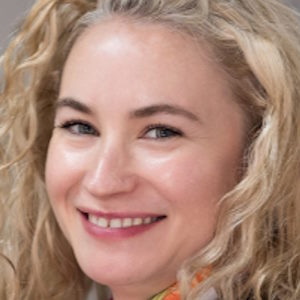
Rachael Jack, University of Glasgow
Student Salon: From Academia to Industry: what no one tells you. Insights from Industry Professionals on how to transition into the Corporate Workforce
Friday, March 13, 4:15 – 5:15 PM
During this semi-structured Q&A, SAS trainees will have the opportunity to speak with current industry professionals about their educational and career pathways, factors that influenced their transition into industry, and how they are applying their graduate training in the corporate workforce – proving that affective science is thriving all around us!
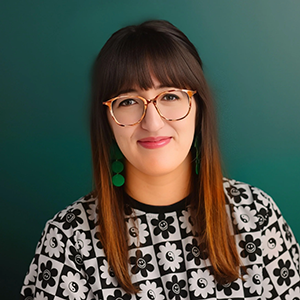
Emily Hittner, Hinge
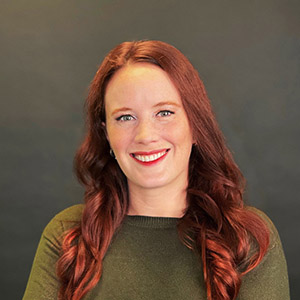
Amy Berglund-Barraza, NIRx Medical Technologies
Affective Science at the National Institutes of Health (NIH)
Saturday, March 14, 11 AM – 12 PM
Curious about federal funding for your Affective Science research? Attend the “Affective Science at NIH” Salon. Program Officers from different NIH Institutes, Centers, and Offices will share information about the scope of affective science in their portfolios. You will hear about what types of topics and projects are of interest to NIH, learn about any open funding, career development, or conference grant opportunities that are relevant to Affective Science, and have the opportunity to ask questions in this informal setting.
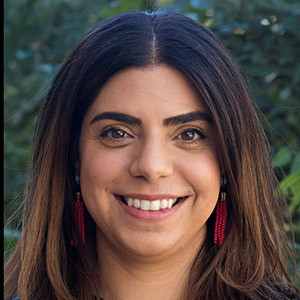
Parisa Parsafar, Eunice Kennedy Shriver National Institute of Child Health and Human Development (NICHD)

Matt Sutterer, National Institute on Aging (NIA)
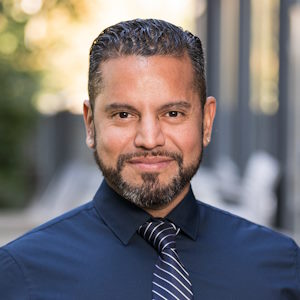
Carlos O. Garrido, National Institute on Minority Health and Health Disparities (NIMHD)
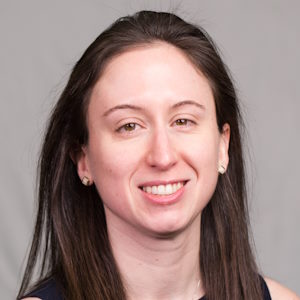
Kristin Brethel-Haurwitz, NIH Office of Behavioral and Social Sciences Research (OBSSR)
Becky Ferrer, National Cancer Institute (NCI)
Holly Moore, National Institute on Drug Abuse (NIDA)
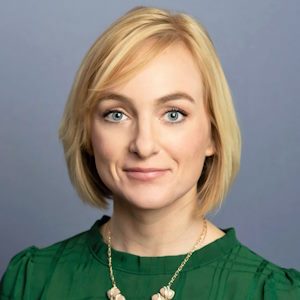
Erin Burke Quinlan, National Center for Complementary and Integrative Health (NCCIH))
Methods
Large Language Models for Sentiment Analysis
Friday, March 13, 8:30-9:30am
 Jeffrey Girard, University of Kansas
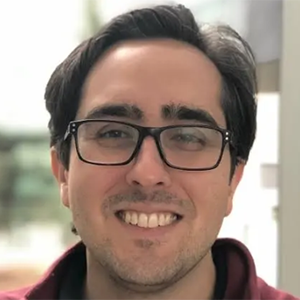 Jeffrey Girard, University of Kansas
Large language models for sentiment analysis
This 60-minute workshop introduces Large Language Models (LLMs) as an accessible, state-of-the-art tool for estimating sentiment in unstructured text data, including essays, social media posts, and transcripts. We will explore how modern LLMs can outperform traditional methods by utilizing “zero-shot in-context learning,” a technique that yields highly accurate sentiment estimates without requiring labeled training data, advanced programming skills, or specialized hardware. Participants will learn practical workflows for applying this technique using two approaches: cloud-based models for speed and power, and locally hosted models for strict data privacy and security. The session will also demonstrate how to leverage the R programming language to automate these tasks, enabling the efficient processing of large file batches. Furthermore, we will review findings from the instructor’s recent publication in Affective Science, which provides a rigorous validation and fairness audit of LLM-based sentiment analysis across naturalistic speech datasets from social and clinical psychology. The workshop will conclude with a dedicated Q&A period to address specific implementation queries, ensuring attendees leave with the rationale and technical know-how to apply these methods in their own research.
Subjective Measurement of Affect
Friday, March 13, 4:15-5:15pm
Vlad Chituc, Yale University
 Vlad Chituc, Yale University
Affective psychophysics: Or, how (not) to measure subjective experience
People can feel more or less happy, hold opinions with more or less conviction, and find some experiences more or less painful. Though all of these examples concern a magnitude, it is far from clear how such magnitudes could be accurately measured, given their inherently subjective nature. In this workshop, I highlight two common and underappreciated problems with the labeled (e.g., Likert) scales that are ubiquitous in affective science, and I provide straightforward solutions adapted from sensory psychophysics. First, these scales are interpersonally relative, in that they can mean different things to different people. This can produce spurious group differences: for example, labeled scales suggest that women experience anger more intensely than do men, but this finding disappears when tested with psychophysical measures designed to avoid such artifacts. Second, these scales are nonlinear: across dozens of studies spanning perceptual, evaluative, affective, and motivational domains, Likert ratings are a logarithmic compression of underlying psychological magnitude, meaning that averaging such ratings systematically underestimates the mean. Both problems have solutions requiring minor changes to measures and analyses, involving at most a dozen lines of code. More broadly, these findings illustrate how insights from classical psychophysics can be productively applied to the measurement challenges that are most central to affective science.
Computational Modeling of Emotion
Saturday, March 14, 8:30-9:30am
Joey Heffner, Yale University
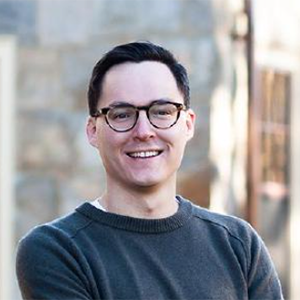 Joey Heffner, Yale University
(Beginner-Friendly) Computational Modeling of Emotion
How do our choices and their outcomes translate into subjective feelings? How does our happiness depend on our choices and what happens to us? Computational accounts of emotion aspire to answer these questions with a rigorous framework informed by formal principles. This methods workshop provides an accessible introduction to modeling emotion within the context of decision-making. We will cover how momentary happiness and affect ratings can be modeled during risky decision-making tasks, while discussing applications to other domains.
This workshop is aimed at graduate students and researchers who are new or interested in the field and want to learn how to use computational approaches to better understand emotions. Prior programming experience is helpful but not required. The workshop focuses on a popular computational model of happiness (Rutledge et al., 2014), using interactive Shiny apps to show how expectations, rewards, and prediction errors combine to influence happiness. By gaining an intuition for the abstract logic used in computational modeling, participants will leave with a clearer understanding of how to implement these tools in their own research. Example data and programming scripts will be provided.
Thank you to our 2026 sponsors and exhibitors
ANT Neuro
Biopac

Cortech

Expiwell
Inclivio

m-Path

MindWare

Movisens

NIRx

Noldus

NuRelm

Plux Biosignals
Psychology Software Tools

Smell Tests