




SAS 2026 Board Elections
On behalf of the SAS Board of Directors, we are pleased to announce that we have identified a set of outstanding candidates to run for open leadership positions on the SAS Board of Directors. You may read about each candidate’s past experiences in affective science and SAS below.
SAS members will be invited in an upcoming email to cast their vote for President-Elect, Treasurer-Elect, and Director-at-Large. We encourage all members to play a role in the future of the Society by casting a vote. An email with the voting link will be sent to current active members. Make sure to renew your membership before voting begins.
Kristen Lindquist, SAS Past-President 2025-2026
Key Dates
Feb 17, 2026: Candidates Announced
Feb 18, 2026: Elections open
Feb 28, 2026: Elections close
Mar 3, 2026: Candidates notified of results
Apr 1, 2026: New Board term begins
Nominees for President-Elect
Katharine (Katie) Greenaway, PhD, University of Melbourne
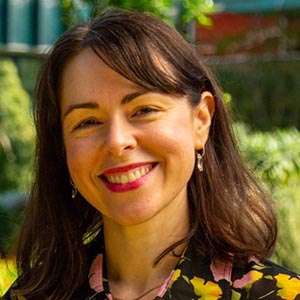
The big problems of our time—political unrest, erosion of trust in science, climate distress, pandemics—are also emotional problems. Like many in SAS, I use the tools of affective science to understand how people can stay socially connected and emotionally well in an uncertain world. A defining feature of my work is testing theory in everyday life, often using experience sampling to capture near real-time psychological processes. Via these methods, I study the benefits of belonging, the costs of secrecy and loneliness, and how emotions can motivate collective action.
SAS thrives for the same reason people do: community. One of our society’s defining strengths is how welcoming it is—especially notable given the diversity of disciplines, methods, and topics SAS members bring to affective science. To me, protecting and growing this community is the central responsibility of SAS leadership.
SAS is in great hands, and I would like us to continue the work of supporting students and trainees, including exploring expansions to hardship support. We could also consider strengthening transparency in awards and recognition, like adopting criteria that account for career interruptions. More broadly, I advocate for fostering a culture that celebrates team science, growing our field through collaboration rather than competition. This might include recognition of joint research, inclusive authorship guidelines, or awards for data sharing and service to the field.
As an Australia-based member, I’m mindful of the structural barriers that shape who can participate fully in SAS. I’m a Professor at the University of Melbourne, where I co-direct the Functions of Emotion in Everyday Life (FEEL) Lab with Associate Professor Elise Kalokerinos and Professor Pete Koval. This context guides my perspective on SAS as a society with international membership and relevance, and my goal to reduce barriers to global participation where possible.
I’ve worked with SAS since 2021 on the Program, Awards, and Outreach Committees, and I currently co-organise the SAS Emotion Regulation Pre-conference. I see society leadership as service: listening and thinking carefully, making space for others, and doing the steady work of improving the structures that shape who can participate, and how. I’d be honoured to continue contributing as SAS President-Elect.
June Gruber, PhD, University of Colorado Boulder
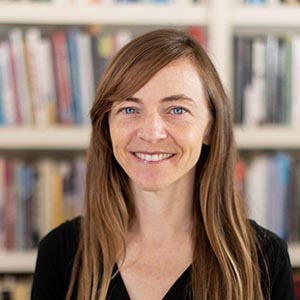
I am a clinical psychologist and affective scientist. I received my PhD in Psychology from the UC Berkeley where I was part of the Predoctoral Training Consortium in Affective Science. After completing my clinical internship, I started as an Assistant Professor of Psychology at Yale University and am currently a Professor of Psychology and Neuroscience at the University of Colorado Boulder, where I direct the Positive Emotion and Psychopathology Laboratory. Together, my lab members and I seek to understand when, why, and for whom positive emotions can become dysregulated and contribute to psychological disorders, and how positive emotions play an essential role in human well-being.
Since SAS’s inception, I’ve actively participated and served several leadership roles. Early on, I helped shape SAS’s early visibility as Chair of the Positive Emotion Pre-Conference and the inaugural Social Media Outreach Committee. Since then, I have been humbled to support SAS’s next generation of affective scientists as a Flash Talk Judge and Speed Networking Event Mentor. More broadly, I am deeply engaged in disseminating affective science to the broader community, including creating the Experts in Emotion Series (a freely available resource with over 50 interviews), serving as an Associate Editor for Emotion and on the editorial board at Affective Science, and am currently the Editor-in-Chief at Current Directions in Psychological Science, where I aspire to elevate the voice and perspectives of affective scientists globally.
I would be deeply honored to serve as President-Elect of SAS during a period of growth and possibility for our field. I would be especially excited to elevate several important priorities: (1) Strengthening inclusivity and representation across voices, regions, methodologies, and career stages. Our science thrives when it reflects the full diversity of scholars studying emotion; (2) Enhancing public engagement and real-world impact of affective science. Emotions are central to our everyday lives, relationships, and are at the crux of pressing global challenges, from mental health crises and sociopolitical conflict to climate change. I believe SAS can play a strong role in translating affective science for educators, policymakers, educators, and the broader public; and (3) Supporting trainees and the future of SAS. Students and early-career researchers are navigating an increasingly complex academic landscape. I would prioritize initiatives that support mentorship and professional development, to ensure that SAS remains a welcoming and empowering community.
Thank you SAS community for your consideration!
Nominees for Directors-at-Large
Sandra Langeslag, PhD, University of Missouri – St. Louis
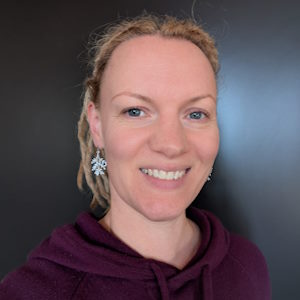 I am an Associate Professor and Associate Chair at the School of Social Work and Psychological and Brain Sciences at the University of Missouri – St. Louis in the US. I earned my PhD in Biological and Cognitive Psychology from the Erasmus University Rotterdam in The Netherlands and completed a post doc in the Laboratory of Cognition and Emotion directed by Dr. Luiz Pessoa at the University of Maryland in the US.
I first attended a SAS conference in 2016 in Chicago and was so excited to finally have found a conference that fit my research interests. I think SAS and its conference fill such an important gap in the scientific community. I love the innovative formats of the conference sessions and the multidisciplinarity of the society. I served on the program committee for the SAS conference in Boston in 2017 and have been serving on the SAS publication committee since 2023.
I am eager to increase my contributions to SAS by becoming a Director at Large. I would like to help make the scientific process more efficient, as research funding is getting harder to obtain. I could also represent interests of international scholars within the society, since I’m originally from The Netherlands and understand some of the challenges (and benefits!) of being a non-US scholar. Finally, it is my aim to promote non-competitive, collaborative science. After all, we are all working towards the same goal of improving life by increasing our evidence-based knowledge of affect.
At the University of Missouri – St. Louis, I direct the Neurocognition of Emotion and Motivation lab. Research in my lab focuses on the interaction between emotions and cognition, such as emotional memory and emotion regulation. Much of our research focuses on the interaction between romantic love and cognition, including how being in love may distract you from other duties (such as work or homework) and love regulation. Our research focuses on the intrapersonal aspects of romantic love and fits within the realm of affective and cognitive neuroscience. I hope that research on romantic love will increase its positive effects and decrease its negative effects on individuals and society.
Thank you for your consideration!
Jennifer Veilleux, PhD, University of Arkansas
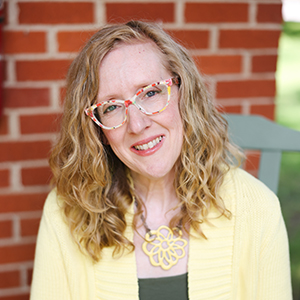 I am a Professor of Psychological Science at the University of Arkansas and a licensed clinical psychologist. I received my PhD from the University of Illinois at Chicago in 2011. My lab at the University of Arkansas, called the Treating Emotion and Motivational Processes Transdiagnostically (TEMPT) lab focuses on problems of emotion and self-regulation that underlie psychological symptoms that prompt people to seek psychotherapy. I am particularly interested in examining factors that most people consider from an individual difference lens (e.g., distress intolerance, self-criticism, emotion beliefs) from a state perspective (i.e., personality states). Right now, my passion is on understanding why so many people struggle to allow and tolerate their distress, by exploring momentary emotional and cognitive factors (e.g., self-criticism, perceived willpower, self-efficacy for emotion regulation) that underlie the emotion regulation choices that people make in moments of time.
Because I’ve studied affect my entire career, colleagues told me “you should check out SAS.” I was hesitant to try a smaller, newer organization, but when I finally attended my first SAS in 2022, I immediately felt like I found my society home. As a clinical psychologist at the intersection of social, personality, and clinical psychology with a core focus on affective processes, I never felt like I belonged at other conferences. I felt too clinical in the social/personality world, but too “basic” in the clinical world. But because SAS is multidisciplinary, anyone who is interested in affect from any lens has a home at SAS. I am committed to keeping SAS’s focus on emphasizing cutting edge new work, and fostering connections across all areas of affective science that will prompt innovation. I’d also like to see SAS take a leading role in enhancing the public’s understanding of affective science. As a trainer of future clinicians and in my own clinical practice, I’ve seen firsthand how sharing the science of emotion can improve people’s lives. My recent book, published in 2025, Open to Emotion: How Acknowledging, Using, and Regulating Your Feelings Can Improve Your Mental Health, aims to teach people what they need to know about affective science to enhance their emotional functioning, in an accessible and clear way. Affective science is flourishing, and I’m committed to broadly disseminating the exciting and enriching research SAS members are conducting.
Hongbo Yu, PhD, University of California Santa Barbara
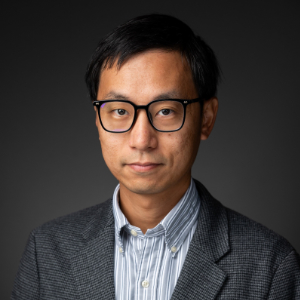 I am an Associate Professor in the Department of Psychological and Brain Sciences at University of California Santa Barbara, and the director of the Yu Emotion Science (YES) Lab. One line of research in my lab charts the moral landscape of individuals and societies to understand how emotions emerge from “upheavals of thought”. More concretely, we study computational and neurocognitive mechanisms of social emotions (such as guilt and gratitude), their moral significance, and how they are shaped by history and culture. Another line of research focuses on person perception and impression formation. We are specifically interested in how physical features of a person’s face and conceptual knowledge of that person (e.g., a public figure or someone you personally know) jointly shape the neural representation and impression of that person. Our approach is experimental, computational, and when appropriate, neuroscientific. Complementing this approach, we also use computer vision and large language models (LLMs) to quantitatively characterize our naturalistic stimuli and/or responses. I was the abstract committee co-chair (2021) and chair (2022) for the Annual Conference of the Society for Affective Science, and served on the Board of Director from 2024 to 2025. Growing up as a person and as an affective scientist in China, I am dedicated to making the SAS community more inclusive and open to non-Western, early-career, and traditionally marginalized researchers. I strongly believe that a more inclusive SAS community, both in terms of the background of its researchers and in terms of the subjective matter and methodology, will be a better place for all its members.
Nominee for Treasurer-Elect (running unopposed)
Stephanie Marita Carpenter, PhD, Arizona State University
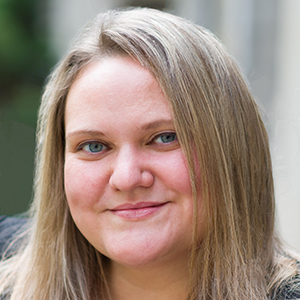 I am faculty at Arizona State University in the College of Health Solutions and Director of the ENGAGE Lab. A social and affective psychologist by training, I earned a joint PhD in Psychology and Business Administration from the University of Michigan, followed by an NIMH-funded Postdoctoral Fellowship in Emotion Research at the University of Wisconsin–Madison.
SAS is my intellectual home. My research examines emotions and engagement and their impact on health behaviors. I use mixed-methodological approaches to develop innovative person-centered digital just-in-time adaptive interventions that offer the right support at the right time. My research incorporates physiological measures and ecological momentary assessment to study health-related outcomes including stress regulation, substance use, physical activity, and cancer. This work is currently supported by the National Science Foundation, the Patient-Centered Outcomes Research Institute (PCORI), and the U.S. Department of Agriculture.
I have been actively involved in SAS leadership positions for many years. I joined SAS in 2014 and have served as Co-Chair of the Membership and Outreach Committee since 2020. I served as Co-Chair of the Program Committee for the 2022 Annual Meeting, and I have attended SAS Executive Board meetings since 2024 as a Director-at-Large Representative of the Membership and Outreach Committee. I have worked closely with current and past SAS Treasurers to understand the budgetary needs and constraints when launching and supporting several initiatives, including the SAS listserv, newsletter, inaugural in-person regional event, sponsored virtual events, and repositories for conference recordings and other materials. From these experiences I have familiarity with SAS operations, budgeting considerations, and strategic priorities, as well as a strong appreciation for working together across the leadership and membership to represent the diverse perspectives and needs within SAS.
As SAS Treasurer, I will strive to ensure the Society’s continued financial health while advancing its strategic goals. I plan to support initiatives that expand engagement opportunities for members and to continue growing SAS as a leading affective science organization and hub for research and professional development for members across career stages. I will support efforts that foster collaboration, innovation, mentoring, fair registration rates, and engagement with external stakeholders and funding agencies.
Beyond SAS, I have experience previously serving as Treasurer for the UW–Madison Postdoctoral Association. I would be honored to serve as SAS Treasurer and to contribute to effective stewardship of the Society’s finances in support of SAS’s values and a vibrant, inclusive, and sustainable future.