





Special Symposia
Diversity Symposium
Friday, March 13, 2026 11:15-12:15
The Diversity Symposium will be a panel discussion looking toward the future of a truly diverse and representative affective science. What does it mean to diversify our field? How do we deeply infuse consideration of cultural context (in all its forms) into research on affect and emotion? What should we be doing differently – what boundaries do we need to push – in the decades ahead to reach that goal?
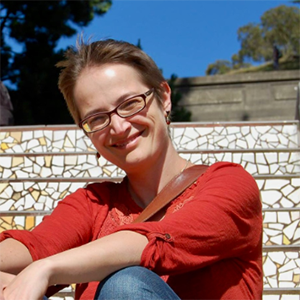
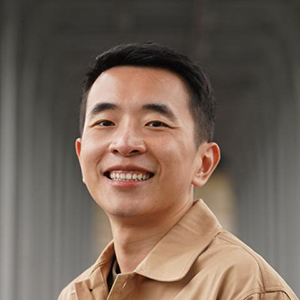
Mark Chen
Harvard University
Dr. Mark S. Chen is an incoming Assistant Professor in the Department of Psychology at Harvard University. He received his PhD in Clinical Psychology from Columbia University and completed a Susan Nolen-Hoeksema Postdoctoral fellowship at Yale University. His research examines how stress and adversity shape mental health across the lifespan, with a particular focus on the transdiagnostic role of emotion regulation in affective psychopathology across diverse contexts. Integrating clinical, affective, and cultural science, his work investigates how emotion regulation processes are shaped by situational and sociocultural contexts, and how flexible, context-sensitive regulatory patterns can be modeled to advance theory and inform personalized interventions. To study these processes across diverse contexts, he uses a multi-method approach spanning laboratory experiments and psychophysiology, ecological momentary assessment, large-scale longitudinal design, and cross-cultural comparisons and meta-analyses.
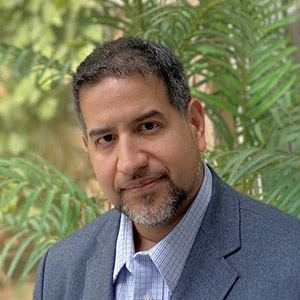
Jose Soto
Penn State University
Dr. Soto is a Professor of Psychology in the Clinical Science Program at the Pennsylvania State University, where he has been since 2005. He received his Ph.D. in clinical psychology from the University of California, Berkeley in 2004. His teaching, service and scholarship focus on advancing knowledge that is informed by diversity. In particular, his research examines the intersections of culture, health, and emotion, with an emphasis on the study of ethnic minority culture and those experiences associated with marginalized status (discrimination, oppression, etc.). His work has been published in Emotion and other journals such as Personality and Social Psychology Bulletin, Journal of Anxiety Disorders, and Cultural Diversity and Ethnic Minority Psychology. He is currently on the editorial board of Psychological Bulletin, Journal of Latinx Psychology and serves as an Associate Editor for Emotion. Dr. Soto has received grant funding from the NIH to support his research and his work has been featured on national public radio and other media outlets throughout the U.S. He has received numerous awards for his work on diversity within academia and is the 2012 recipient of the Charles and Shirley Thomas Award from division 45 for his “significant contributions to the education and training of students of color as well as a professional presence within ethnic minority communities.” Dr. Soto is a fierce advocate for diversity, social justice and inclusion via his teaching, research and service roles.
Awards Symposium
Saturday, March 14 9:45-10:45am
Early-Career in Affective Science Award

Desmond Ong
University of Texas at Austin
Mid-Career Trajectory in Affective Science Award

Hedy Kober
University of California Berkeley
Best Dissertation in Affective Science Award

Nada Alaifan
King Saud University
Valence Influences on Episodic Memory: A Cognitive Processing Theory
The assumption that memory for emotional events (e.g., a graduation celebration or a funeral service) is superior to memory for routine, mundane events is widespread. However, evidence from episodic memory research provides, at best, mixed support for this assumption, leaving open questions about how and when emotions enhance memory. This line of research consisted of a meta-analysis along with three large-scale experiments, using memory tests that varied by the extent to which they relied on integrative/environmentally-driven versus elaborative/self-initiated processing. The main findings from this work validate the common belief that emotional events are remembered better than neutral ones, validating also more specific assumptions that the emotional enhancement effect is larger for negative than for positive pictures, larger in free recall than in recognition memory, and also larger after a long retention interval than a short one.
This work was guided by a novel theory I call Emotional Events Interrupt-Processing Augment (EEI/PA) theory. The EEI/PA theory predicted the main findings from my meta-analysis, as well as those of my experiments, all of which tested the EEI/PA’s core assumption: that valence influences encoding-phase accommodative/elaborative processing, but not assimilative/integrative processing. My work demonstrates that the EEI/PA theory can explain the findings based on the influence of valence and further highlights the need for an integrated account that identifies the unique contributions of both valence and arousal to the way in which we remember emotional events.
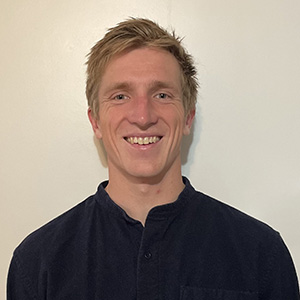
Kieran McVeigh
Northeastern University
Modeling inter- and intra-individual variation in brain–valence relationships with deep generative models
Cognitive and affective neuroscience often relies on the assumption of a one-to-one, linear mapping between brain activity and behavior. This assumption, however, overlooks the principle of degeneracy, where multiple distinct neural states may produce the same psychological outcome. To address this, we developed a semi-supervised deep generative framework (Variational AutoEncoder with Classification head; VAE-C) that simultaneously models the distribution of brain states (unsupervised) and their relationship to behavioral labels (supervised). We then applied this framework to a densely sampled fMRI dataset (N=36) where participants viewed approximately 324 emotionally evocative videos over 4 separate sessions.
We found that brain–valence mappings are predominantly many-to-one, participant-dependent, and at times nonlinear. Model comparison revealed that for 31 of 36 participants, nonlinear classification models outperformed linear baselines, but that the strength of these effects varied considerably across participants. Furthermore, generative analysis revealed robust evidence of many-to-one mappings: hierarchical clustering across a range of dissimilarity thresholds showed that the overwhelming majority of participants had many-to-one brain-valence mappings (between 80% and 100% depending on threshold). When brain states were compared across individuals, many states were unique to a single individual or shared by only a small subset of individuals. Together, these findings underscore the limitations of seeking universal “neural signatures” for valence—and behavior more broadly—and suggest the necessity of modeling inter- and intra-individual differences in these processes.
Presidential Symposium
Saturday, March 14, 2026 16:15-17:15
Rethinking Emotion: Lessons from Animals, Machines, and Plants
Emotion research has historically been shaped by who or what was thought capable of emotional experience, and by the methods available to detect it.
For example, infants were once thought incapable of feeling pain, marginalized humans were assumed to lack certain emotional capacities, and animals were long denied complex affective lives.
In each case, the introduction of new methods — physiological markers, behavioral paradigms, neuroimaging, electrophysiology — revealed emotional capacities previously unrecognized, leading not only to scientific re-evaluation, but also to ethical, social, and legal changes (e.g., neonatal care, animal welfare laws, research ethics).
This symposium invites attendees to consider what lessons non-human and non-traditional systems can teach us about emotion.
By examining animals, AI, and plants, we explore: What counts as emotion? What does it require? And how might expanding our conceptual framework affect research, ethics, and society?
Moderator
Speakers

Thank you to our 2026 sponsors and exhibitors

ANT Neuro

Biopac

Cortech

Expiwell

Inclivio

m-Path

MindWare

Movisens

NIRx

Noldus

NuRelm

Plux Biosignals

Psychology Software Tools

Smell Tests