




Journal
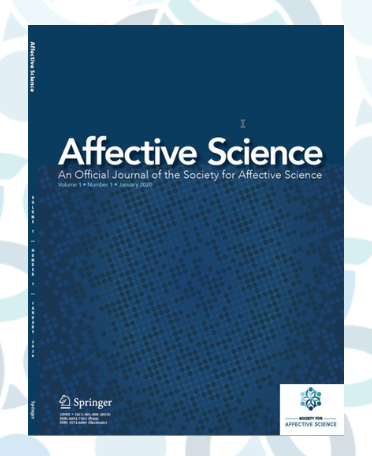
Affective Science is the flagship journal of the Society for Affective Science. Published Issues can be viewed by SAS Members.

Published Issues - Members login
Click to login as a Member to view published issues of Affective Science.

Submissions
We are accepting submissions via the Springer manuscript portal. Click for additional instructions.
Affective Science Mission
The journal recognizes the central role that affective processes (including but not limited to emotions, stress, evaluations, motivation) play in the lives of individuals, groups, cultures, and countries, and their profound implications for health and well-being.
Affective Science provides a forum for both basic and applied research. It primarily publishes full-length and brief reports of original research but also publishes methodological, review, and theoretical articles.
Article Types
The journal publishes research articles, brief reports, theoretical and review articles, methodology articles, and commentaries/opinions.
- Research articles: the most common submission is a research article that reports an original, empirical study or studies in the field of affective science. These are limited to 2,000 words (including all introductory and discussion material in the main text, any footnotes, and acknowledgements), but the method and results have no word limits. The abstract is to be no longer than 250 words. There are no limits on figures, tables, or references. Supplemental material can be submitted and will be reviewed.
- Brief reports: these are limited to 750 words (including all introductory and discussion material in the main text, any footnotes, and acknowledgements). The abstract is to be no longer than 250 words. Method and Results sections have no word limits. There is a maximum of two figures or tables and 20 references.
- Theoretical/review articles: these take two forms: (1) 2,500 word limit (including all main text and footnotes), with an abstract no longer than 250 words; there are no limits on figures, tables, or references) and (2) 5,000 word limit (including all main text and footnotes). The abstract is to be no longer than 250 words. There are no limits on figures, tables, or references.
-
- The 2,500 word review is: (a) written with the non-specialist in mind, (b) relatively narrowly focused, (c) concerned with an emerging topic, (d) selective in its literature review, and (e) attentive to future directions.
- The 5,000 word review is: (a) written with the specialist in mind, (b) more broadly focused, (c) concerned with more mature topics, (d) more comprehensive in its literature review, and (e) concerned with both historical context and future directions.
- Methodology articles: these include novel experimental approaches, statistical techniques, material development, and other methodological innovations directly relevant to affective science. Methodology articles have a 5,000 word limit. The abstract is to be no longer than 250 words. There are no limits on figures, tables or references. Use of supplemental information and available open-source materials are encouraged.
- Commentary/Opinions: these are typically solicited based on a target article, however we will consider unsolicited commentary and opinions relevant to affective science. Commentary/Opinions are limited to 2,500 words.
Journal Policies
Blinding
The journal uses a single-blind review process.
Formatting
The journal uses APA style 7th edition.
Language
The journal uses the singular “they” (e.g., “The participant was instructed to start the program, and they completed all questions on-line before moving to the next task.”).
Statistics
Effect sizes and confidence intervals should accompany all reported statistics whenever possible.
Open science
The journal uses the transparency and openness (TOP) guidelines (Level II) for all empirical papers (https://www.cos.io/initiatives/top-guidelines).
| Citation standards | Article provides appropriate citation for data and materials used consistent with journal’s author guidelines. |
| Data transparency | Data must be posted to a trusted repository. Exceptions must be identified at article submission. |
| Analytic methods transparency | Code must be posted to a trusted repository. Exceptions must be identified at article submission. |
| Research materials transparency | Materials must be posted to a trusted repository. Exceptions must be identified at article submission. |
| Design and analysis transparency | Journal requires adherence to design transparency standards for review and publication. |
| Study preregistration | Article states whether preregistration of study exists, and, if so, allows journal access during peer review for verification. |
| Analysis plan preregistration | Article states whether preregistration with analysis plan exists, and, if so, allows journal access during peer review for verification. |
| Replication | Journal encourages submission of replication studies and conducts results blind review. |
Editorial Board 2026
Editors-in-chief
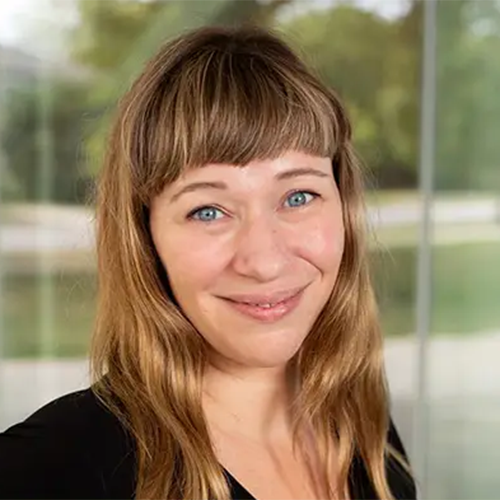
Claudia Haase, PhD
Northwestern University
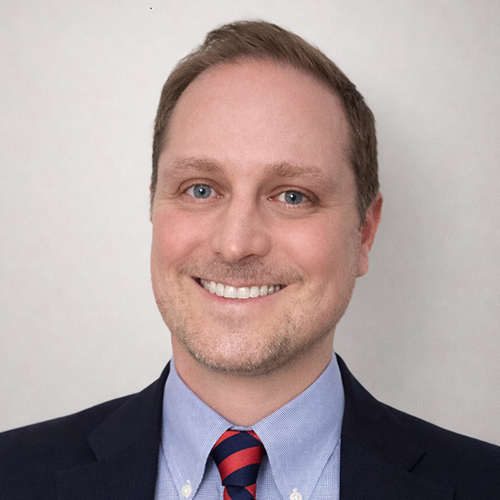
Jeremy Jamieson, PhD
University of Rochester
Associate Editors
Kuan-Hua Chen, PhD
University of California
Paul Condon, PhD
Southern Oregon University
Tammy English, PhD
Washington University
Katie Hoemann, PhD
University of Kansas
Andrea Horn, PhD
University of Zurich
Elise Kalokerinos, PhD
The University of Melbourne
Hae Yeon Lee, PhD
Seoul National University
Monika Lohani, PhD
University of Utah
Yael Millgram, PhD
Tel Aviv University
Piercarlo Valdesolo, PhD
Claremont McKenna College
Editorial Board
Ralph Adolphs
California Institute of Technology
Karen Bales, PhD
University of California
Linda Camras
DePaul University
Margaret Clark, PhD
Yale University
Lotte Van Dillen, PhD
Leiden University
Emilio Ferrer, PhD
University of California
Luis Flores, PhD
Rutgers University
Dan Foti, PhD
Purdue University
Barbara Fredrickson, PhD
University of North Carolina at Chapel Hill
Dylan Gee, PhD
Yale Psychology
Amie Gordon, PhD
University of California, University of Michigan
James Gross
Stanford University
Jamie Hanson, PhD
University of Pittsburgh
Martie Haselton, PhD
University of California
Derek Isaacowitz, PhD
Northeastern University
Dana Joseph, PhD
University of Central Florida
Philip Kragel, PhD
Emory University
Mariska Kret, PhD
Leiden University
Kristin Lagattuta, PhD
University of California
Sandra Langeslag, PhD
University of Missouri
Jennifer Lerner, PhD
Harvard University
Robert W. Levenson
University of California
Jennifer MacCormack, PhD
University of Pittsburgh
Abigail Marsh, PhD
Georgetown University
Iris Mauss, PhD
University of California
Wendy Berry Mendes
Yale University
Michael Mendl
University of Bristol
Kalina Michalska PhD
University of California
Joseph Mikels
DePaul University
Yuri Miyamoto, PhD
University of Wisconsin–Madison
Keely Muscatell, PhD
University of North Carolina at Chapel Hill
Nicole Nelson, PhD
Adelaide University
Maital Neta, PhD
University of Nebraska–Lincoln
Erik Nook, PhD
Weill Cornell Medicine
Lauri Nummenmaa, PhD
University of Turku
Bunmi Olatunji, PhD
Vanderbilt University
Andreas Olsson, PhD
Karolinska Institutet
Anthony Ong, PhD
Cornell University
Hakan Ozcelik, PhD
California State University
Diego Pizzagalli, PhD
Harvard Medical School
Aric Prather, PhD
University of California
Karen Quigley, PhD
Northeastern University
Alex Shackman, PhD
University of Maryland
Amitai Shenhav
University of California
Michelle (Lani) Shiota
Arizona State University
Nancy Sin, PhD
University of British Columbia
Leah Somerville, PhD
Harvard Psychology
Virginia Sturm, PhD
University of California
Jacinth Tan, PhD
Singapore Management University
Bethany Teachman, PhD
University of Virginia
Katherine Thorson
Barnard College
Eric Walle
University of California
Lisa Williams, PhD
UNSW Sydney
Jolie Wormwood, PhD
University of New Hampshire
Yang Wu, PhD
Stanford University
Open Access Publishing
Did you know that SAS members may have access to free Open access article processing charges through their institution or country? See Springer’s list to discover institutions with OA agreements by region of the world here: https://www.springernature.com/gp/open-science/oa-agreements. Corresponding authors from an institution with an OA agreement will automatically receive free open access publishing following article acceptance.